elcome to Historic Williams, Arizona
illiams was the last city bypassed by I-40. Several
events throughout the summer celebrate our history in
full. From the car shows to the gunfights to parades to rodeos,
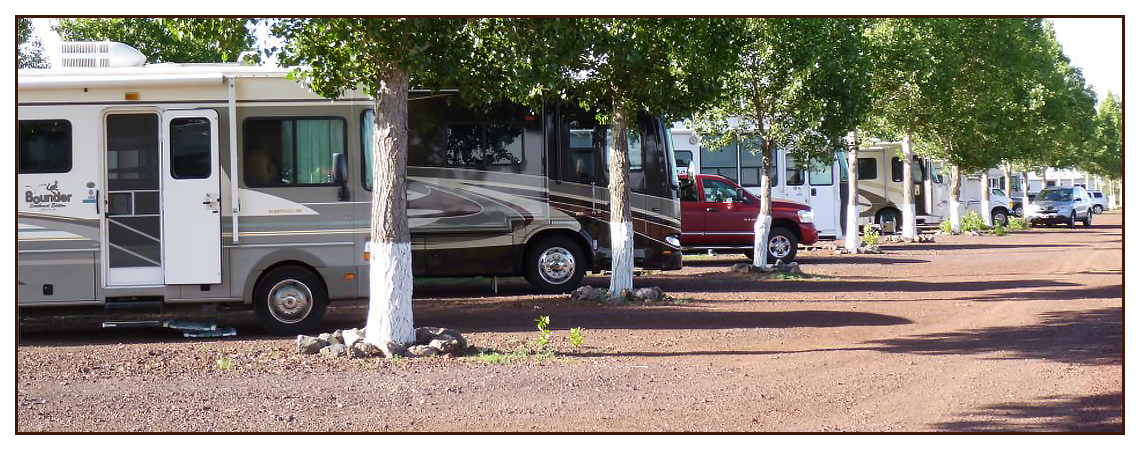
you are invited to join us in the celebrations. Our park is in the
perfect location over-looking the historic city. We are close
enough that you can go into the city and participate in the
activities and shopping, yet far enough to enjoy the cool summer
evenings. Every May we welcome the Veterans of Run for the Wall
and in June the Hog Rally into Williams.
If you are leaning the other direction,you can simply walk right
into the Kaibab forest right from our park. Hike to the Three
Sisters or on top of “old Bill.” Both are healthy walks which
require you to remember water. Water and other snacks to make
you hike enjoyable can be obtained at the Chevron station.
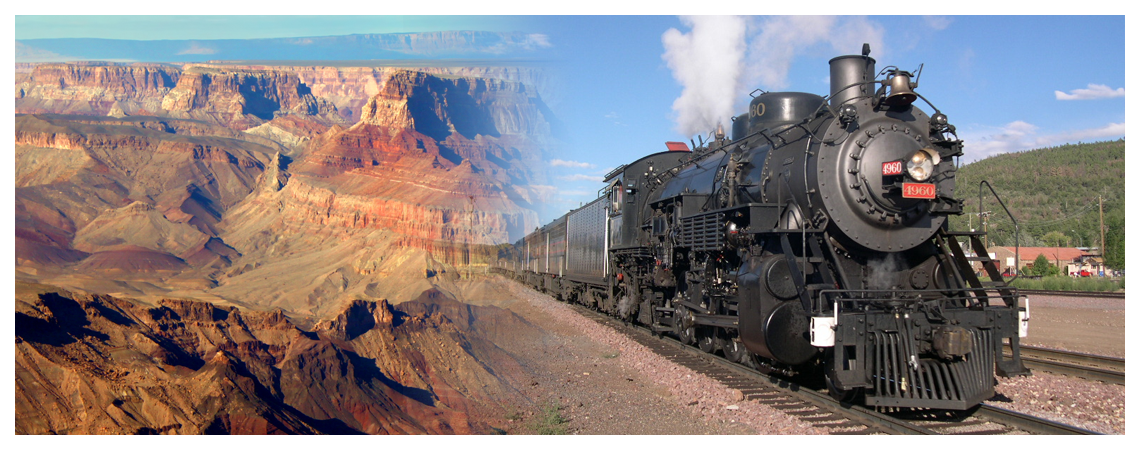
Naturally if your trip includes a visit to the Grand Canyon. You
can leave your RV in our secure surroundings while you visit the
canyon.
Whatever the purpose of your visit, David and the gang are here
to serve you. No one makes a greater effort to satisfy you than
our staff.
About Williams
Mexico gained independence from Spain in 1821 thereby opening the Arizona territory to trappers
and mountain men. Williams was named after one of these fabled mountain men, William Sherley
Williams. A statue of “Old Bill” stands in the park on the west end of Williams. The surrounding
valleys and meadows drew ranchers and farmers after the Civil War. In 1879, Cattleman Charles T.
Rogers purchased land at the foot of Bill Williams Mountain in anticipation of construction of the
transcontinental railroad. Following the arrival of the Atlantic and Pacific Railroads in 1882-linking
Williams with far away markets-Williams quickly grew as a center for the railroad, ranching and
lumber industries.
In 1893 the Saginaw Lumber company opened a large mill and later a box factory. the business
was a major factor in the town’s economy until its closure in 1940.
Williams had a reputation as a rough, tough and rowdy frontier town by the turn of the century.
Its saloons, brothels, opium dens and gambling houses catered to the cowboy, logger, Chinese
laborer and railroad worker. These businesses were restricted by ordinance to “Saloon Row” along
Railroad Avenue. Legitimate business flourished along Bill Williams Avenue, but the towns principal
merchant, Cormick E. Boyce, is attributed with the building of the town. Most of the wooden
building from the early period burned down in a series of disastrous fires.
In 1901, a spur line was built to the Grand Canyon. Williams became know as the Gateway to the
Grand Canyon. Travelers found luxurious accommodations at the Fray Marcos, on of the many
“Harvey Houses” built by the Santa Fe Railroad and operated in partnership with the Fred Harvey
company. Thousands of well-bred young women were recruited from the Eastern United States to
work in the restaurants and hotels. “Harvey Girls” were renowned for their charm and gracious
service.
In 1926, US Highway 66 was established through Williams, which served the touring public as part
of the “Main Street of America.” Williams became the last “Route 66” town in America to be
bypassed in 1984. Bill Williams Avenue, a section of America’s Main Street, won national Historic
Register status in 1989.
Williams is proud of its frontier heritage and its continuing role in serving those who enjoy
recreation and travelers, and its location in the midst of natural beauty. On December 30, 1984,
the downtown business district achieved listing on the National Register of Historic Places.
